Quick answer: for most home lifters, a 20 kilogram multipurpose Olympic barbell with a shaft of about 28 to 29 millimeters, a medium knurl and a rated tensile strength of at least 150,000 PSI is the safest first purchase. Specialized bars for powerlifting, Olympic weightlifting and deadlifts exist, and they pay off only when your training matches the job. The rest of this guide explains what each number on a product page means, so you can compare bars on the same terms.
This is general information about gym equipment. Lifting heavy weights carries a risk of injury, so check that any bar is rated for your loads and speak with a qualified coach or a physician if you have questions about your own training.
In this guide
Start with the lifts you actually do
A barbell is a tool, and the right one depends on the work. A lifter who squats, presses and deadlifts three days a week has different needs from one who snatches and cleans. Write down the lifts you do most and the heaviest loads you expect to use in the next two years. Then judge every bar against that list, not against the longest feature list on a product page.
If you do a mix of lifts, a multipurpose bar is the sensible choice. It gives up a little of what a specialized bar does best and handles everything acceptably. If most of your sessions are one discipline, the specialized bar earns its price.
Reading the specification sheet
Product pages use the same handful of terms. This table shows what each one means and what to look for.
| Specification | What it means | What to check |
|---|---|---|
| Shaft diameter | Thickness of the bar between the sleeves | About 28 mm suits most hands, and about 29 mm is common on power bars |
| Tensile strength | How much stress the steel takes before it fails, in PSI | 150,000 PSI or more for a bar that will see heavy loads |
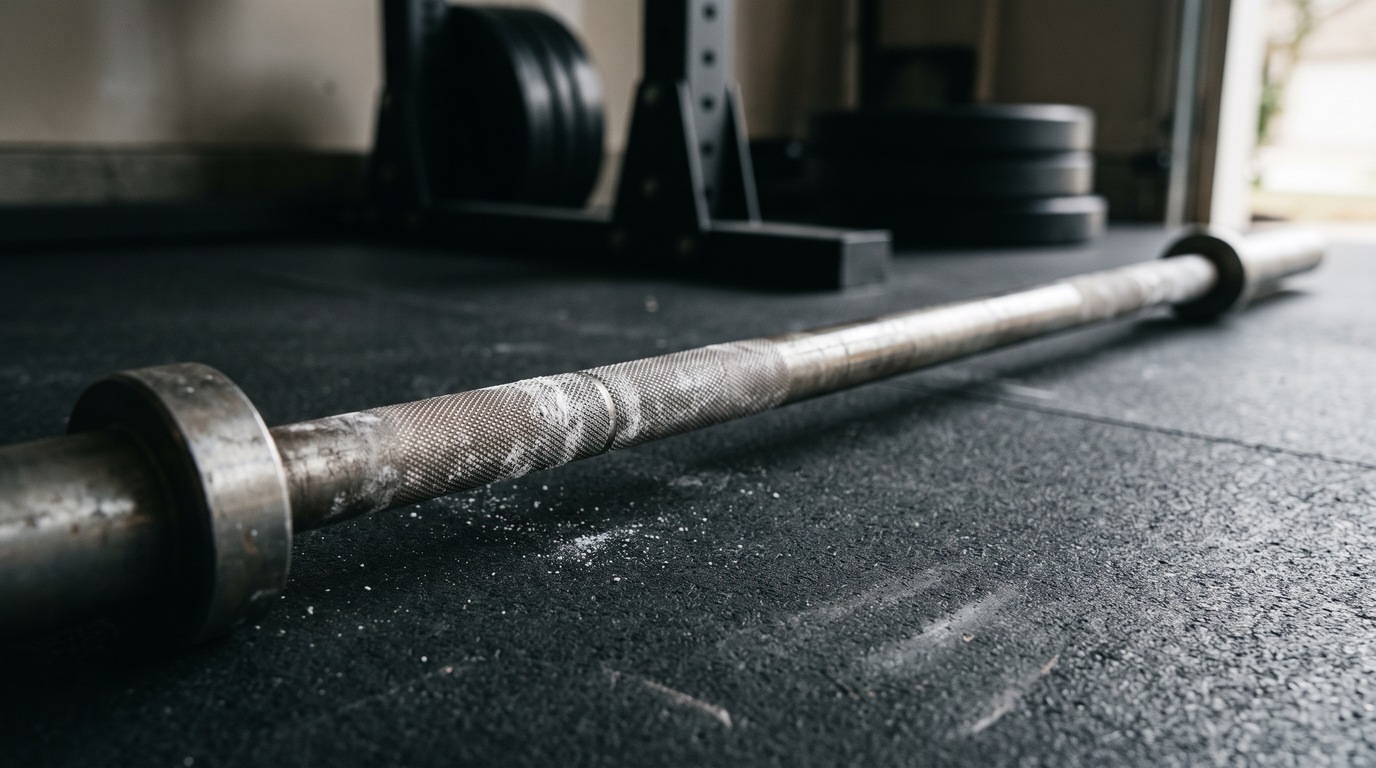
| Knurling | The textured grip pattern on the shaft | Medium depth for general use, with or without a center section |
| Sleeve rotation | How freely the plate-holding ends spin | Bushings for general use, needle bearings for fast lifts |
| Finish | The coating on the steel | Black oxide, zinc, chrome or ceramic coatings resist rust differently |
| Weight and length | Mass and overall length of the bar | A standard men’s bar is 20 kg and about 7 feet long |
| Load rating | Maximum weight the maker supports | Compare to the heaviest load you will ever use |
Types of bars compared
Multipurpose bars
These sit in the middle on shaft diameter, knurl and whip, which is the amount the bar flexes under load. They suit mixed training and are the usual first bar.
Power bars
A power bar is stiff, with an aggressive knurl and often a center knurl that helps keep the bar on the back during squats. Its shaft is commonly about 29 mm. It suits heavy, slow lifts and is less forgiving for fast Olympic lifts.
Weightlifting bars
These bars have a thinner shaft of about 28 mm, more whip and smoother sleeve rotation. The knurl is usually lighter, and there is no center knurl on many models. They suit the snatch and the clean and jerk.
Deadlift bars
Deadlift bars are longer and thinner, with a shaft of about 27 mm. The extra length and flex let the bar bend before it leaves the floor. They are a specialist purchase.
Technique and women’s bars
A lighter bar of 15 kg with a shaft of about 25 mm suits smaller hands and beginners learning movements. Technique bars are lighter still and suit practice.
Sleeves, bushings and bearings
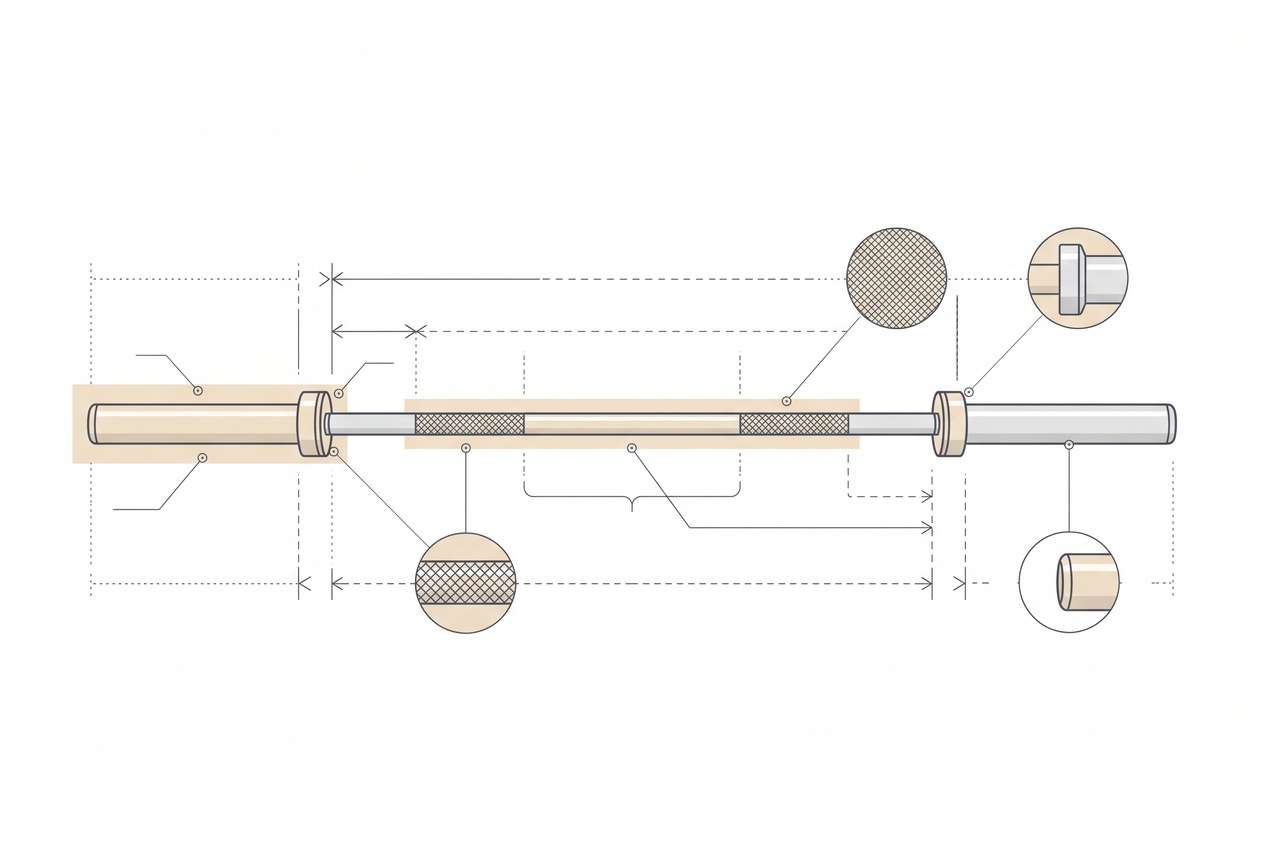
The sleeves are the parts that hold plates. Check that their diameter is 50 mm, which is the standard for Olympic plates. A bar with a 1-inch sleeve will not take Olympic plates, so skip it unless you already own that style of plate.
Sleeve rotation matters most for fast lifts. Bushings are bronze or composite liners set inside the sleeve, and they give a smooth, durable spin that suits most lifters. Needle bearings spin more freely and suit weightlifting. Neither is better in every case.
Also check the loadable length of the sleeve. Longer sleeves hold more plates, which matters if you plan to lift very heavy loads.
Finish and care
Bare steel feels good and rusts quickly in humid rooms. Black oxide and zinc coatings offer moderate protection, and ceramic coatings offer more. Chrome looks clean and holds up well, though some lifters find it slick.
Care is simple. Wipe the bar after use, brush the knurl with a nylon brush when chalk builds up and apply a light coat of oil a few times a year. Store the bar horizontally on a rack or vertically in a holder, not leaning at an angle that can bend it over time. Keep it out of damp corners.
Common mistakes
- Buying a specialized bar for a mixed training plan.
- Choosing by the highest tensile strength figure without checking the load rating.
- Ignoring sleeve diameter and ending up with plates that do not fit.
- Assuming a 45 pound label means the bar weighs exactly 45 pounds, when many 20 kg bars weigh about 44 pounds.
- Skipping care and letting rust build in the knurl.
Frequently asked questions
Is a more expensive bar always better?
No. Price often reflects the finish, the sleeve system and the brand. A plain multipurpose bar with a sound steel and a fair knurl serves most home lifters well.
Should I buy a power bar or a multipurpose bar?
If you mainly squat, bench and deadlift heavy and rarely do fast lifts, a power bar is a good fit. If you mix training, choose a multipurpose bar.
Do I need needle bearings?
Only if you do fast Olympic lifts regularly. Bushings are fine for most other training.
The bottom line
A barbell should match your lifts, your loads and your hands. Choose a shaft diameter and knurl you can hold comfortably, confirm the sleeve diameter and load rating, and look after the finish. Start with a multipurpose bar unless your training clearly points elsewhere.