Quick answer: if you drop weights from overhead or deadlift from the floor and want to protect your floor and your bar, bumper plates are the better choice. If you mostly lift in controlled sets and never drop the bar, iron plates cost less and take up less space on the bar. The right answer depends on how you lift, what is under your feet and how much room the bar has for plates.
This is general information about gym equipment. Heavy plates can cause injury if dropped or mishandled, so follow the maker’s instructions and speak with a qualified coach if you have questions about technique.
In this guide
How the two types differ
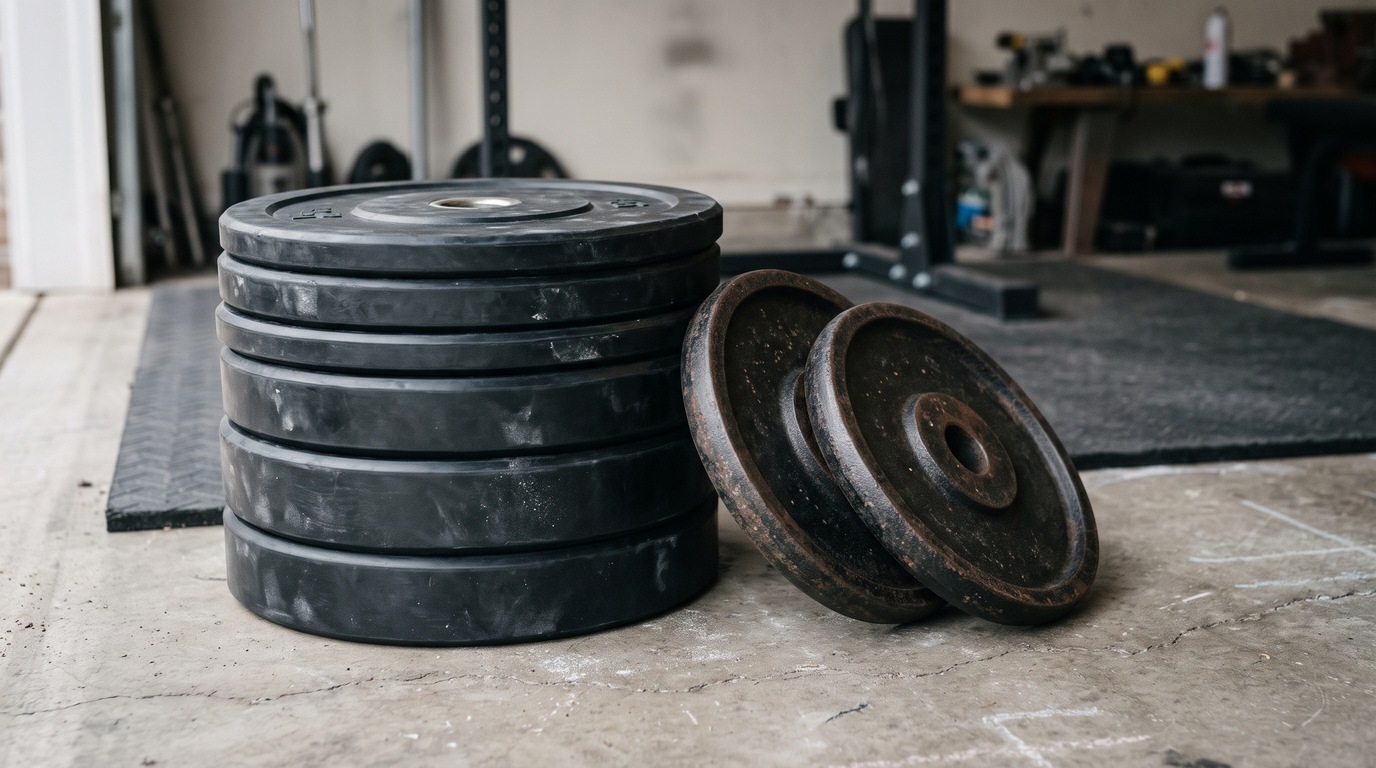
Both types fit a standard Olympic bar, because the center hole, called the bore, is about 50 millimeters across. The difference lies in the material. Iron plates are made of cast iron or steel and are thin and hard. Bumper plates are made of dense rubber around a steel insert and are thicker and softer.
That difference changes four things: how the plate handles a drop, how much space it uses on the bar, how loud it is and how much it costs.
Thickness and bar space
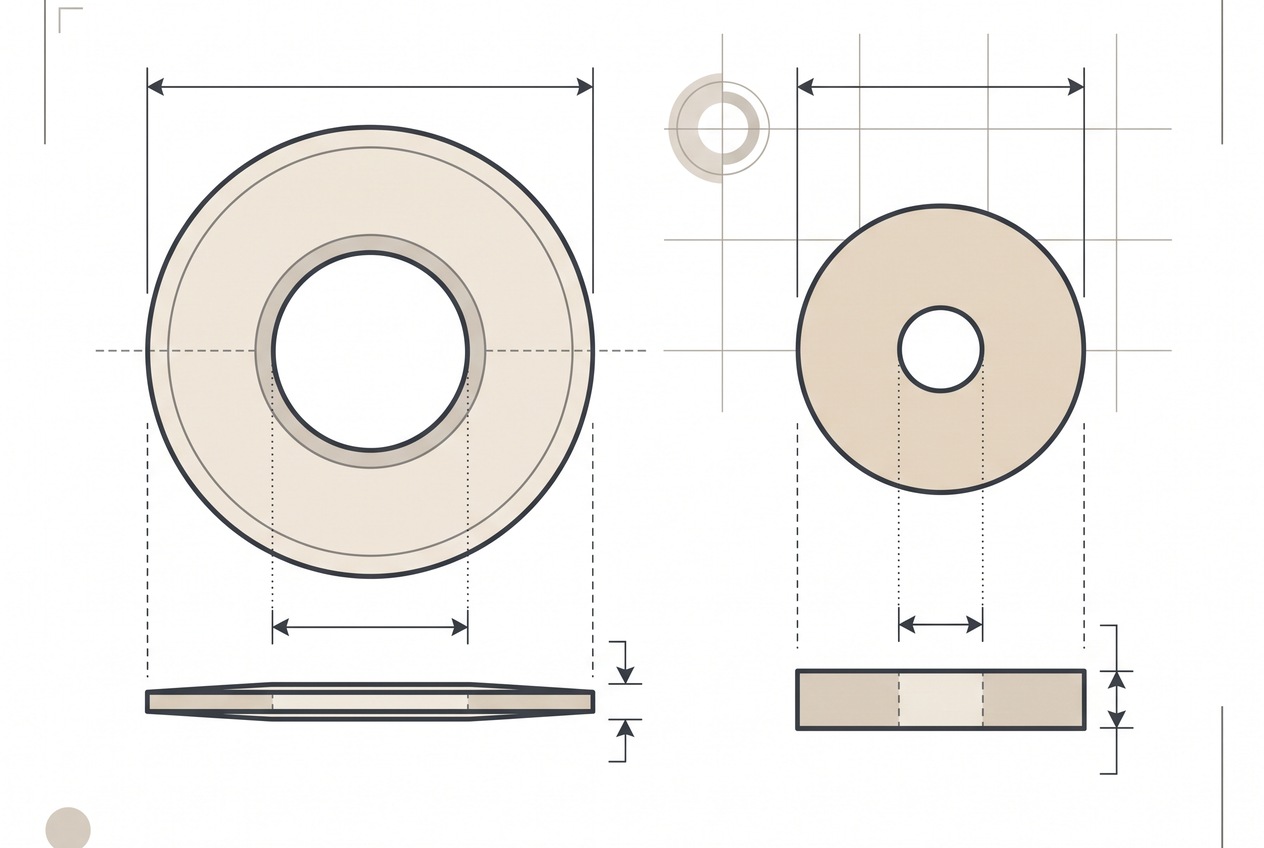
Thickness is the most practical difference. A 45 pound iron plate is often around 1.25 inches thick, while a 45 pound bumper plate is commonly around 1.8 to 2 inches thick. The sleeve of a bar has limited loadable length, so thicker plates mean fewer plates fit.
If you plan to lift very heavy loads, count the plates you would need and compare the total thickness with the sleeve length. A bar that holds 8 iron plates per side may hold only 5 or 6 bumper plates per side.
Bounce, noise and floors
Bumper plates are made to be dropped. The rubber absorbs impact, and the plate may bounce. That makes them the usual choice for Olympic lifts and for deadlifts where the bar is lowered fast.
Iron plates are not made for dropping. A dropped iron plate can crack a concrete slab, chip a tile and bend a bar. If you use iron plates, lower the bar under control every time, and put a mat under the lifting area.
Both types are loud, but bumpers are quieter and thud rather than clang. If you live in an apartment or share a wall, this matters more than the price.
| Feature | Bumper plates | Iron plates |
|---|---|---|
| Thickness at 45 lb | About 1.8 to 2 inches | About 1.25 inches |
| Drop tolerance | Made for dropping | Not made for dropping |
| Noise | Dull thud | Sharp clang |
| Cost per pound | Higher | Lower |
| Floor protection | Better | Needs a thick mat |
| Bar space | Uses more | Uses less |
Types of bumper plates
Bumper plates come in a few grades. Basic recycled-rubber plates are the cheapest and can smell for the first weeks. They may vary slightly in weight. Mid-range plates use virgin rubber with a steel insert and hold their weight within a close tolerance. Competition plates have tight tolerances, color coding and thin profiles that suit meets.
Check the tolerance if you will track small increases. A plate labeled 45 pounds should be within a small margin of that weight.
Weight, color and markings
Competition plates use a color code for weights, while many home plates are black with colored stripes or all black. Look for clear weight markings that will not wear off, since you will read them often.
If you also own a bar from a different maker, check the bore and the sleeve fit. A plate that is too snug may be hard to load, and a plate that is too loose can rattle and shift.
Floors and storage
Plates are heavy, and so is the floor load. Concrete garage slabs handle them well. Wood floors and apartment floors need more care, so use rubber mats or a lifting platform and spread the weight.
Store plates on a plate tree or a vertical rack, not stacked in a corner. Stacked plates are hard to move and can fall. Storage also affects bar space, because a tree that holds ten plates needs floor area.
How to choose
Think through your training in this order:
- Will you drop the bar from overhead or the floor? If yes, choose bumper plates.
- How much weight will you lift? If you plan very heavy loads, check bar space.
- What is the floor? Concrete tolerates more than wood.
- What is the budget? Iron plates cost less per pound, and bumpers cost more.
- Who shares the space? Noise matters in shared buildings.
Many lifters buy a mixed set. They use bumper plates for the first plates on the bar and iron plates for the heavy loads, which keeps costs down and saves bar space.
Cost per pound and set size
Compare plates by cost per pound, not by the price of a single plate. Divide the total price of a set by its total weight. A starter set of two 45 pound plates, two 35 pound plates and smaller change plates may cost far less per pound than buying the same weights one at a time.
Think about the set you will own in a year, not only today. If you expect to add weight, leave room in the budget and on the bar. Buying a cheap set that you outgrow in three months costs more than buying the right size once.
Common mistakes
- Dropping iron plates onto a thin mat.
- Buying plates before checking the bar’s loadable length.
- Assuming a basic rubber plate has tight weight tolerance.
- Ignoring floor strength in an upstairs room.
- Storing plates in a stack instead of on a rack.
The bottom line
Bumper plates protect the floor and the bar and suit dropped lifts. Iron plates save money and bar space and suit controlled lifting. Decide by how you lift, what is under your feet and how many plates the bar must hold, and consider a mixed set if both matter.