Quick answer: buy the sturdiest bench your budget allows, and check its stated weight capacity, the steel gauge of the frame and the way the pad is attached before looking at extra features. A flat bench is the simplest and often the steadiest. An adjustable bench gives more exercise options but has more parts that can wobble. A utility bench sits in the middle.
This is general information about gym equipment. A bench that fails under load can cause injury, so assemble it exactly as the maker describes, use safeties and a spotter for heavy sets, and speak with a qualified coach if you have questions about technique.
In this guide
What a bench has to do
A weight bench must hold your body weight and the weight you lift steady, without rocking, twisting or sliding. It must also place your body in a safe position for presses and rows. Every feature on a product page serves one of those two jobs, so compare benches on stability first.
Flat, adjustable and utility benches
Flat benches
A flat bench has one position. It has few moving parts, so it is usually the most rigid. It suits lifters who mainly bench press and want the steadiest base.
Adjustable benches
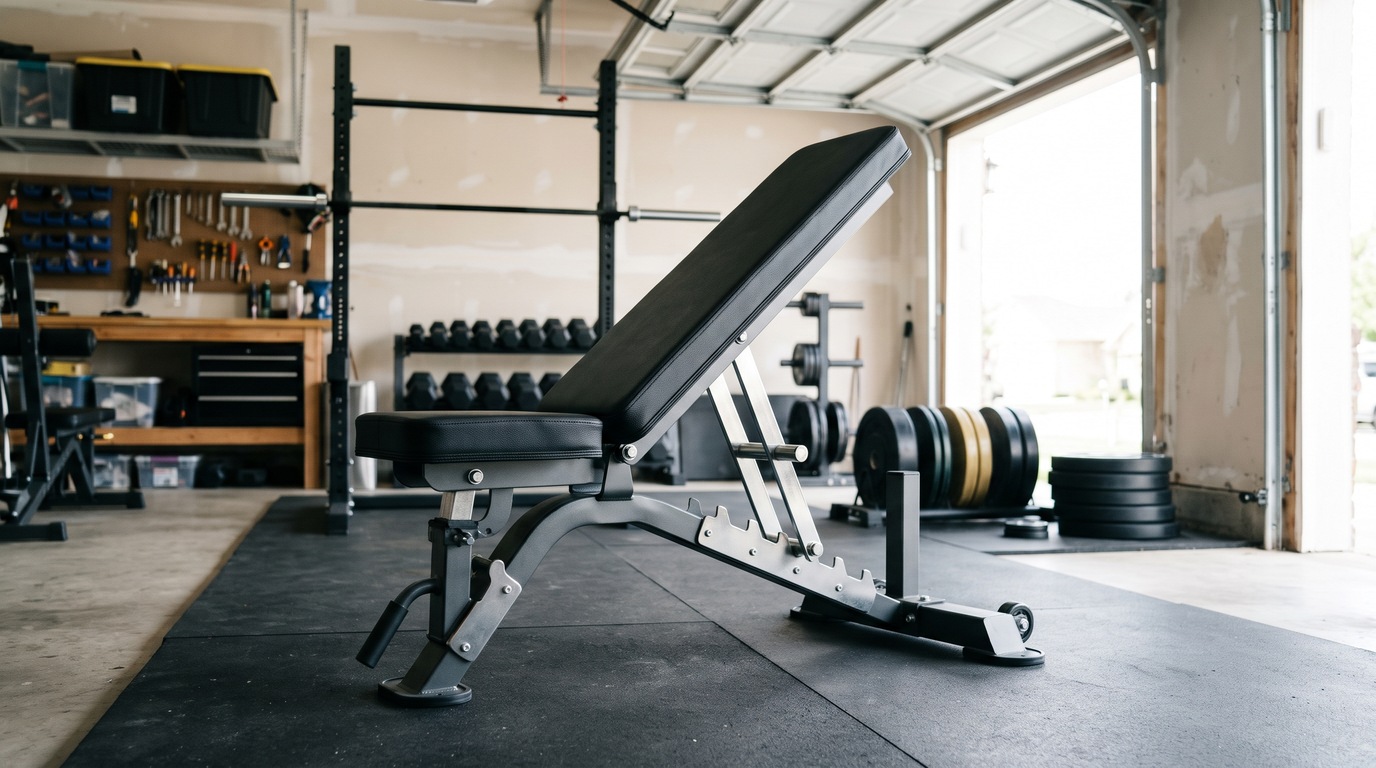
An adjustable bench changes angle, with a back that can incline and often decline and a seat that adjusts. It lets you do incline presses, shoulder presses and seated work. The trade-off is more joints and pins, which can loosen and flex.
Utility benches
Utility benches usually offer a few fixed angles and a modest price. They suit light to medium loads and small spaces.
| Type | Best for | Watch for |
|---|---|---|
| Flat | Heavy bench pressing | Fewer exercise options |
| Adjustable | Variety of exercises | Wobble at joints |
| Utility | Light to medium training | Lower weight ratings |
Weight capacity
The weight capacity is the combined limit of the lifter and the load. A bench rated for 600 pounds covers a 200 pound lifter and a 400 pound bar, in theory. Some makers rate only the load. Read the fine print.
Pick a rating well above your highest planned load. Heavy sets create peak forces higher than the static weight, so a thin margin is risky.
Frame, steel and feet
The frame is the part that matters most. Look at the steel gauge, which is the thickness of the metal. A lower gauge number means thicker steel. Heavy-duty benches use 11 gauge steel, and lighter models use thinner steel.
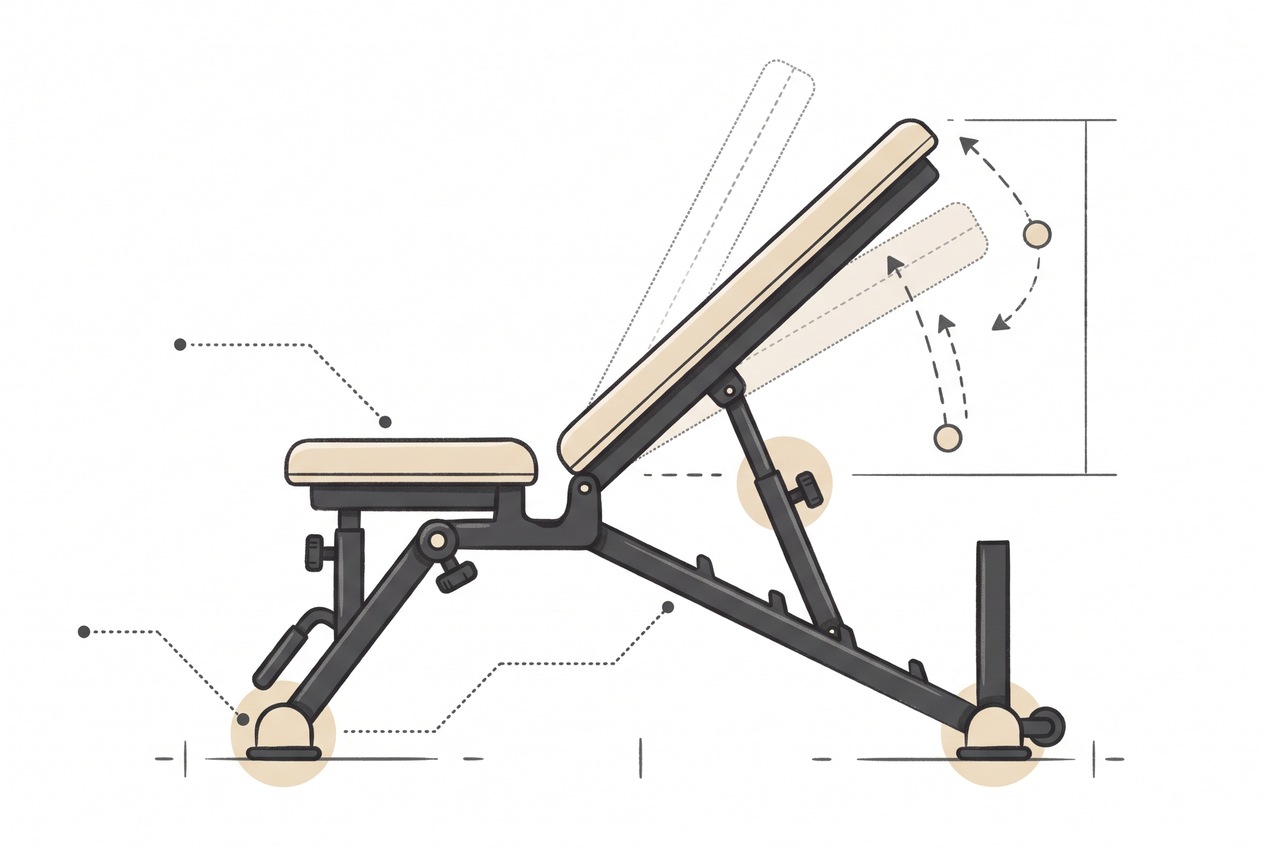
Check the feet. Wide, flat feet with rubber caps keep the bench from sliding and protect floors. Narrow feet can rock on uneven surfaces. A wide base resists tipping, especially on incline presses.
Welded joints are stronger than bolted joints, though both can be sound. Inspect the welds for clean beads and look for gaps at the bolts.
Pad and upholstery
A bench pad should be firm, since a soft pad compresses under load and moves your body. Look for dense foam, a non-slip vinyl cover and stitching that is strong. A tapered pad lets you tuck your shoulder blades back.
Check the pad’s width and length. A pad that is too wide can interfere with arm movement, and one that is too short may leave your head unsupported. The pad should be firmly bolted to the frame and not glued only.
Incline range and seat adjustment
If you choose an adjustable bench, check the number of positions and the range. Common options run from a slight decline to near vertical. Some benches also adjust the seat, which keeps your hips from sliding on incline presses.
Test the adjustment. Pins that slide smoothly and lock firmly are better than ones that stick or rattle. A ladder-style adjuster with many positions offers more choices than a few pins.
Rack compatibility and storage
If you use a rack, check that the bench fits under the bar with space to move. Some benches are made to match a rack’s width. Benches with a narrow front fit tight spaces better.
Storage matters in small rooms. Some benches fold, and some have wheels. A folding bench can be less rigid, so consider whether you need it.
Testing a bench before you buy
If you can visit a store, sit on the bench and press down on the corners. Rock it from side to side and listen for creaks. Move the adjustment through its full range and check that the pad does not shift. Lie back and look at where the pad ends relative to your head and hips.
When you buy online, read the return policy first, because a bench that wobbles at home is hard to judge from photos. Look for reviews that describe wobble under heavy loads, loose bolts and pad seams that split.
Assembly and upkeep
Assemble the bench on a flat floor, and tighten every bolt to the maker’s instructions. After the first week of use, check the bolts again, since vibration can loosen them. Do the same check every few months.
Wipe the pad after use, since sweat breaks down vinyl over time. Touch up paint chips on the frame to prevent rust. If a pad tears or a weld cracks, stop using the bench until it is repaired or replaced.
Common mistakes
- Choosing a bench for its many positions and ignoring stability.
- Reading a total capacity as the load capacity.
- Buying thin steel to save money and then lifting heavy.
- Using a soft pad that compresses under load.
- Skipping an assembly check and leaving bolts loose.
The bottom line
A good weight bench is steady, firm and rated well above your highest load. Choose a flat bench for heavy pressing, an adjustable bench if you need variety and a utility bench for lighter work. Check the steel, the feet, the pad and the adjustment before you pay.